










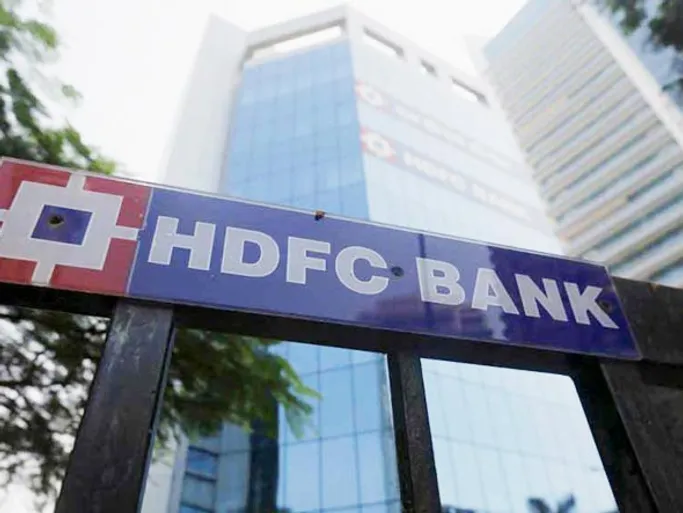
HDFC, Axis, and ICICI Banks Implicated in Cobrapost Sting Operation Exposing Corruption
Quantum Advisors India
Building your India portfolio since 1990 on a foundation of ethics, integrity & disciplined investment research process.
While all this macro stuff is fun and games, the real news - from our perspective as value managers - was a sting operation by Cobrapost. A reporter who claimed to be a relative of a politician with Rs 10 million went around with a hidden camera and asked banks in many parts of India to help him convert the “black” to “white”. Rather than being shooed away, senior personnel at 49 branches of HDFC Bank, Axis Bank, and ICICI Bank gave him some very clear solutions. It seemed like they had done this before.
Again, to clarify, since there was no Rs 10 million to launder, there was no transaction. And being taped on video describing how to perform a crime is not the same as actually going ahead with the crime. But... While we were not surprised with ICICI Bank being caught in the sting operation and Axis Bank was a little less of a surprise (the current CEO is ex-ICICI), the inclusion of HDFC Bank has been a blow. We have always maintained that there are 4 things of value in India: HDFC, Infosys, Tata, and gold. The Tata group has lost some of its shine ever since Mr. Ratan Tata’s conversations with lobbyist Niira Radia were made public during the telecom spectrum scandal. Our fear factor has been that, as India continues to operate in murky waters, good companies will be swayed to do “bad stuff” to grow their business. The involvement of an HDFC entity is an “et tu Brute” moment for us.
Ironically, a few months ago the revered Mr. Deepak Parekh, the Chairman of HDFC (the largest shareholder of HDFC Bank) had said that the media was wasting its time fighting corruption and that corruption could not be eradicated. We criticized Mr. Parekh for his comments. Corruption, in our opinion, is the number one enemy and a person of his stature should be leading the charge in such a battle. But, alas, corporate India is really Chicken India and continues to seek favors and grow its business based on being nice to the government in power. Mr. Parekh must be feeling vindicated now that his own company is allegedly a part of the system.
Related Post


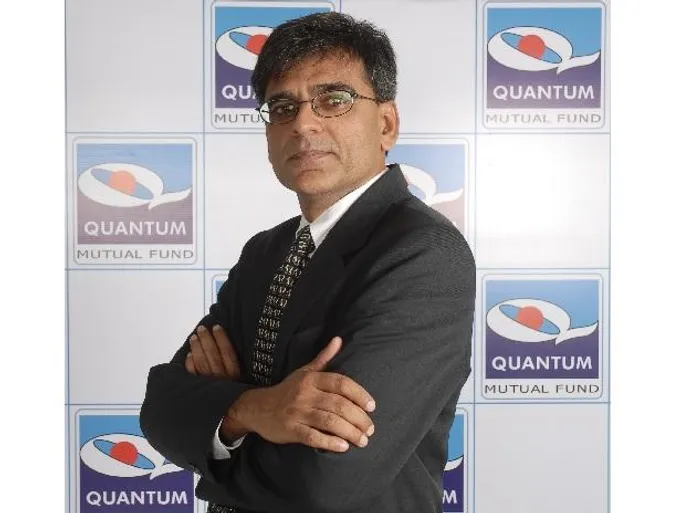
Our History
Quantum Advisors was founded by Ajit Dayal as India’s first institutional equity research house in January 1990.
Our Strategies
Explore how our two main strategies – Predictable India Equity and India Integrity Equity - with demonstrated success of our tried and tested research and investment processes can ensure your India equity allocation will have higher predictable outcomes and no surprises.
Q India Value Equity Strategy
20+ years of India Long-only, Liquid, High-Governance, Margin of safety = Predictability
Integrity screen since 1996, strategy Track record since 2000.
Q India Responsible Returns Strategy
Liquid, proprietary Integrity Scores, Financial Soundness
Integrity Screen since 1996, enhanced criterion since 2015, strategy Track Record since 2019; strategy AuM: $9.7 mn Mandate Capacity: $5 billion
Quantum Advisors pioneered a quantitative as well as qualitative analytical approach to equity investing in India, providing for the first time, consistently applied valuation metrics to evaluate investment opportunities in India’s emerging stock markets. Over the years, Quantum Advisors has continued and enhanced its tradition of extensive financial analysis and value investing, as it has evolved into an investment advisor and asset manager.
Our investment philosophy and strategy involves the use of intensive qualitative and quantitative fundamental analysis. We build and monitor our clients’ portfolios actively while at the same time avoiding excessive trading, and control risk by endeavoring to keep our clients’ portfolio adequately diversified, both in terms of the sectors included in those portfolios, as well as with respect to the level of concentration in any specific security.